

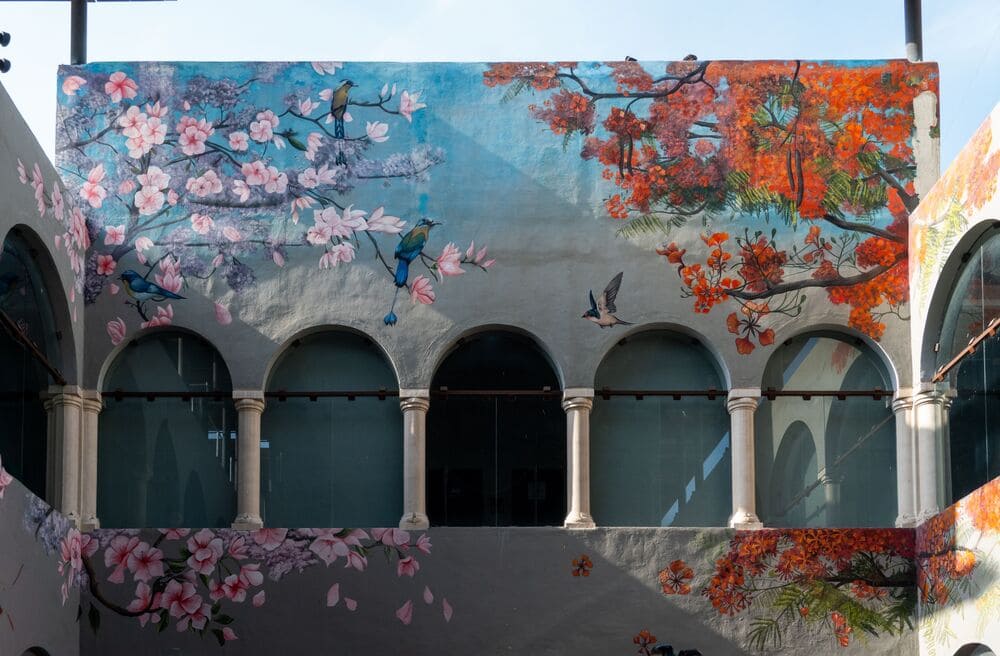
Mural painting is a fantastic way to add colour, creativity and personality to almost any space. From large-scale exterior wall murals and colourful pavement artwork to commercial spaces, schools and interior feature walls, murals can completely transform an ordinary surface.
Whether you’re a professional mural artist, a business looking to brighten up your premises, or simply want to try something creative at home, choosing the right paint is essential.
Painting murals can be tricky at the best of times, and it gets much harder if you don’t have the right paint, equipment or preparation. Don’t worry, we’re here to help. At Paintmaster, we supply a wide range of paints suitable for mural projects, including exterior masonry paints, specialist floor paints and interior emulsions.
Whether you’re working with brushes, rollers, spray equipment or combining traditional paints with aerosol artwork, choosing the right products makes all the difference.
Read on for tips, tricks and our mural painting guide.
What is a Mural?
A mural is a piece of art applied to a permanent surface, typically a wall, although murals can also be painted onto pavements, floors and other suitable surfaces.
If you drive around any UK city or large town, you’ll see the work of talented artists who have been commissioned to create artwork for local communities, councils, schools and businesses.
Exterior murals are a popular way to transform otherwise plain walls, brighten up public spaces and create eye-catching features for commercial properties. Pavement and playground murals are another fantastic way to introduce colour and creativity to outdoor spaces.
When it comes to interior decorating, murals are often smaller affairs, but can be just as detailed. Some artists decorate their own interior walls with stunning artwork, truly making their home unique.
But you don’t have to be a professional artist to create a mural! If you’re patient and have a steady hand, you can make almost any idea a reality.
Where Can You Paint a Mural?
Murals can be painted on a wide variety of surfaces, both indoors and outdoors. The important thing is choosing a paint suitable for the surface and the conditions it will face.
Some of the most popular mural locations include:
- Exterior walls: Brickwork, render and masonry surfaces on buildings, garden walls and commercial premises.
- Pavements and playgrounds: Colourful ground artwork, educational designs and decorative features in suitable pedestrian areas.
- Schools and community spaces: Murals that brighten up playgrounds, corridors, outdoor learning areas and shared spaces.
- Commercial premises: Shops, cafés, restaurants and offices looking to create a unique or branded environment.
- Interior walls: Bedrooms, playrooms, kitchens and feature walls within the home.
Whether you’re creating a large outdoor mural or a small decorative feature, the right preparation and paint will help ensure your artwork looks great for longer.
The Best Paint for Murals
The best paint for murals will always depend on where you’re painting, the surface you’re working with and the finish you want to achieve.
Exterior Wall Murals
For outdoor wall murals, durability is particularly important. Exterior artwork needs to withstand changing weather conditions, moisture and exposure to sunlight.
A good-quality exterior masonry paint is often an excellent choice for suitable brickwork, concrete and rendered surfaces. Paintmaster offers a range of masonry paints that can provide a strong base for colourful outdoor artwork.
Many professional mural artists use masonry paint for larger areas and background colours, particularly when working on extensive walls where significant quantities of paint are required.
Preparing the surface correctly is essential, particularly if you’re painting onto bare, porous or previously painted masonry.
Spray Paint for Murals
Spray paint is another popular choice among professional mural artists, particularly for large-scale exterior artwork, street art and detailed designs.
Many muralists use specialist aerosol spray paints to create intricate details, smooth gradients, shading and bold colour effects. Spray painting can also make it easier to cover larger areas and achieve certain artistic finishes.
However, spray paint isn’t always used on its own. Many professional mural artists combine traditional brush and roller techniques with spray painting, using masonry paint to cover large background areas before adding finer details with aerosols.
This combination can be particularly useful for large exterior wall murals, helping artists achieve both extensive colour coverage and intricate designs.
At Paintmaster, we supply a wide range of exterior masonry paints in various colours and quantities, making them a practical choice for preparing backgrounds and painting larger sections of mural artwork.
When combining different paint types, always check their compatibility and follow the manufacturer’s preparation and application guidance.
Pavement and Ground Murals
Pavement murals and ground artwork require a different approach from traditional wall murals.
These surfaces experience regular foot traffic, weather exposure and general wear, so choosing a suitable specialist floor or exterior surface paint is essential.
At Paintmaster, we supply a range of floor and specialist coatings, and can help you identify a suitable product depending on the surface, location and intended use.
For public areas, playgrounds and pedestrian spaces, it’s particularly important to consider slip resistance, durability and any relevant safety requirements.
Interior Wall Murals
Most interior wall murals can be painted using a suitable interior emulsion paint.
You’ll want a clean, properly prepared base, which may already be in place if your walls have been painted. If they’re looking a little tired, consider applying a fresh coat before starting your mural.
For busy spaces, such as children’s bedrooms, schools or commercial interiors, choosing a durable, washable finish can help protect your artwork from everyday marks and scuffs.
Furniture and Other Surfaces
For painting murals on furniture, you’ll need a paint suitable for the material you’re working with, whether that’s wood, metal or another surface.
Pairing the correct paint with a suitable primer and undercoat will help achieve a more durable finish.
The Best Colours for Murals
Normally we’d use this section to recommend a few popular colour options, but with murals, the possibilities are almost endless.
Whether you’re creating bold geometric artwork, a colourful playground design, a detailed landscape or a large commercial mural, choosing the right shades is an important part of bringing your design to life.
At Paintmaster, our Colour System allows us to mix a huge range of shades, including colours matched to RAL and British Standard references where available.
This is particularly useful for mural artists and commercial projects that require several specific colours or consistent shades across a larger area.
Whether you need a few small tins for intricate detailing or larger quantities for an extensive mural project, we can help you find the right paint for the job.
How to Paint a Mural
The basic principles of mural painting are similar whether you’re working on an interior wall, an exterior building or a suitable ground surface.
However, preparation and paint selection will vary depending on the location.
For this guide, we’ll focus on wall murals, with additional considerations for outdoor projects.
You will need:
- Suitable mural paint – including all the colours required for your design
- Paint brushes – in various sizes depending on the intricacy of your mural
- Paint roller – for larger areas
- Spray equipment or aerosol paints – if required for your chosen technique
- Chalk or pencil – to sketch the design
- Dust sheets or protective coverings
- Suitable primer or undercoat, if required
- Appropriate protective equipment for the paints and application methods being used
You may also want to use stencils for your design, and some artists recommend projecting the design onto the wall, particularly for larger murals.
Once you have everything, it’s time to get started.
Step One – Prepare the Space
In any painting project, you want to give yourself plenty of room to work.
For interior murals, remove as much furniture as possible or cover it with dust sheets. Make sure you protect the floor too, and there are no gaps in your coverings.
For exterior murals, make sure the surrounding area is safe and accessible. Protect nearby surfaces, windows, pathways and anything else that could be affected by paint splashes or overspray.
If you’re working in a public or commercial space, ensure you have the necessary permissions and appropriate safety measures in place.
You’ll also need plenty of time to complete your mural, so plan your project carefully before getting started.
Step Two – Prepare the Surface
This is a very important step. Even if your walls look clean and unblemished, new paint can reveal imperfections.
Take a close look and remove stains, marks, loose paint and any damaged material that could affect the finish.
Cleaning the surface also helps, as it gets rid of dust and grime that would otherwise interfere with paint adhesion. Allow the surface to dry thoroughly before getting started.
For exterior murals, pay particular attention to the condition of the masonry, any existing coatings and whether a specialist primer is required.
Pavement and ground murals may require additional surface preparation depending on the material and paint system being used.
Step Three – Sketch Your Design
Next, sketch the outline of your mural. This is a vital step and one that shouldn’t be rushed.
Use pencil or chalk for the outline. The choice depends on personal preference and the surface you’re working with.
For larger exterior murals, using a grid system or projector can help transfer the design accurately onto the wall.
Taking the time to get your proportions and layout right will make the painting process much easier.
Step Four – Paint Your Mural
Even for a simple mural, you need to plan the order of your painting carefully.
It’s usually best to paint the largest areas first, then focus on the finer details once those layers have dried.
Start by carefully painting the outlines of your design with a suitable brush, if that’s the technique you’re using. Once the edges are complete, fill in larger areas using a bigger brush or roller.
If you’re combining masonry paint with aerosol spray paints, you may find it easier to complete your larger background sections first before adding shading, highlights and finer details.
Throughout the process, we recommend taking a step back to see how the mural is looking. While tricky, it’s possible to make small adjustments if something isn’t quite right.
For exterior projects, always consider the weather conditions before starting. Avoid painting in rain, extreme temperatures or conditions unsuitable for the product you’re using.
A mural takes much longer than painting a surface with a single colour, so make sure you follow the drying and recoating times listed on the tin to avoid smudges and unwanted marks.
We also recommend keeping some additional paint for any future touch-ups.
Step Five – Admire Your Work
When the final layer has dried, take one more step back to see how it looks.
Whether you’ve transformed an exterior wall, created colourful artwork for a school playground or added a unique feature to your home, a finished mural can make a real impact.
Depending on the paint system and location, you may also want to consider a compatible protective coating to help preserve your artwork.
Your UK Paint Supplier for Mural Projects
Painting a mural can be a complicated task, but the results are absolutely worth it.
From professional mural artists creating large-scale exterior artwork to schools, businesses and homeowners bringing a splash of colour to their surroundings, we’re proud to help customers bring their ideas to life.
At Paintmaster, we manufacture and supply a wide range of paints and coatings, including exterior masonry paints, floor paints, interior emulsions and specialist finishes.
With our extensive colour mixing capabilities and a range of tin sizes and larger quantities available, we can help with projects of all shapes and sizes.
Planning a mural project? Get in touch with Paintmaster to discuss the surface you’re painting, the colours you need and the best paint for the job.
We don’t just do paint. We do Paintmaster.